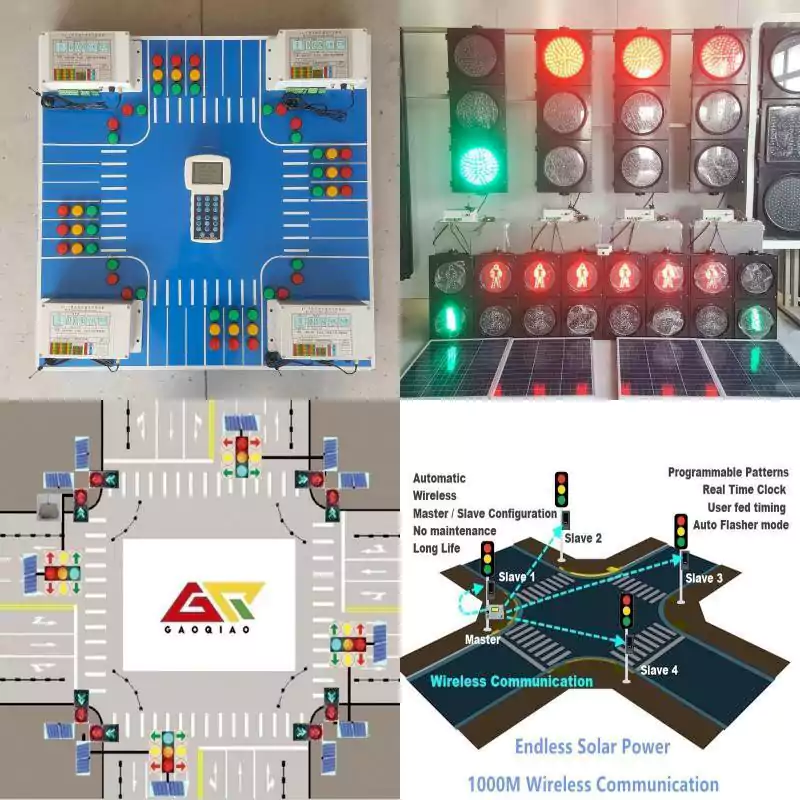
Product Details
Basic Information:
- Product Size:
- 240*135*75MM+215*110*50MM
- power_consumption :
- <0.2W/system
- Drive_Current:
- ≤8A/output
- certificate:
- CE+IP65
- Warranty:
- 5 Years
Product Details:
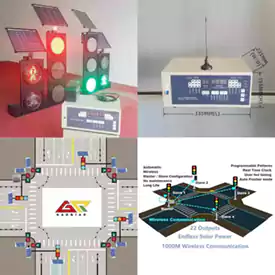
44-Output Wireless Solar Traffic Light Controller: Product Guide for Project Buyers
This 44-output wireless solar traffic-light controller supports distributed traffic-control installations where solar supply, wireless coordination or reduced field cabling is part of the project strategy. It is aimed at projects that need an organised control plan beyond a single standalone signal.
What to Define Before Configuration
- Define the controlled approaches, phase plan and output schedule before selecting the controller configuration.
- Review solar-energy availability, expected duty cycle and the physical placement of field equipment.
- Assess wireless path conditions, distance, obstructions and the required reliability approach for the installation.
- Plan commissioning, field testing, maintenance access and a documented response for communication or power exceptions.
Typical Project Applications
This solution is commonly considered for:
- Rural crossings and remote junctions
- Temporary or semi-permanent traffic-management projects
- Solar traffic-light networks with distributed field equipment
Configuration and Integration Review
To avoid mismatched equipment at installation, confirm the following items with the project drawing and electrical schedule:
- Signal phases, outputs and distributed equipment layout
- Solar power profile and expected operating duty
- Wireless topology, distance and site-obstruction review
- Commissioning tests, maintenance plan and project documentation
The final electrical, optical, mechanical and environmental requirements should be confirmed against the approved project specification before production. This helps ensure that the supplied equipment, mounting parts and control interfaces align with the intended application.
Installation, Commissioning and Maintenance
Installation should be completed by qualified personnel following the site safety plan and local regulations. Before commissioning, check mounting security, cable protection, power isolation, controller logic and visibility from the intended approach. Record the final configuration and keep the wiring and inspection information available for future maintenance.
Questions Buyers Commonly Ask
When is a wireless solar controller appropriate?
It can be considered where the site design supports solar operation and a reliable wireless layout has been assessed.
What should be checked before installation?
Confirm energy availability, equipment locations, wireless path conditions, cable-free interfaces and controller phase logic.
Can the system be expanded later?
Expansion should be reviewed against the approved output schedule, wireless design and available site power capacity.
Request a Project-Based Recommendation
For an accurate quotation, send the application description, site drawing, required quantity, preferred delivery location and any controller or mounting requirements. Our team can review the configuration before you place the order.
Original Product Information
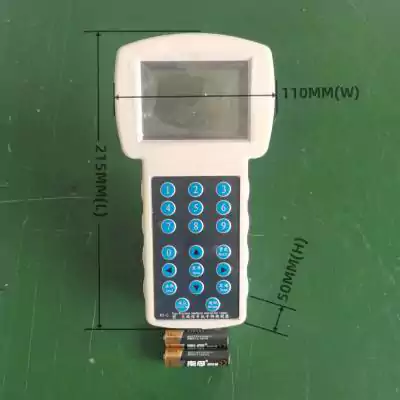
1000M Wireless Communication By Remoter: 433Hz Frequency
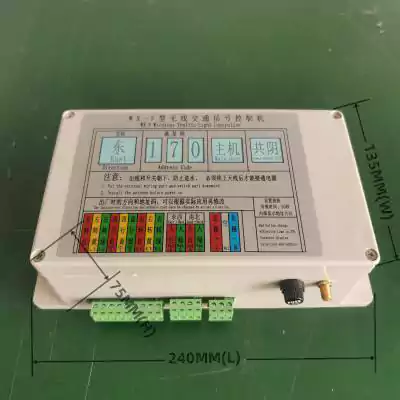
PC(Polycarbonate) Plastic: 240*135*75MM+215*110*50MM For Small Size And Tough Use
44-Output And 6-Phase: 6 Phases For 4 Different Directions By 44 Outputs
 |
 |
|---|---|
| 44-Output Wireless Solar Traffic Light Controller, NJGQ-XHJ-44-WX12 | |
| Length: 240MM/215MM | Handle Remoter For Wireless Operation |
| Width: 135MM/110MM | 1000M Wireless Communication |
| Height: 75MM/50MM | 44-Output+6-Phase |
Related Products
led traffic light & led traffic light controller, whether it is normal power or solar power, portable or mobile, normal or solar warning traffic light, all kinds of traffic signal board, as well as light poles.
6-Output Master Slave Synchronous Asynchronous Wireless Traffic Light Controller
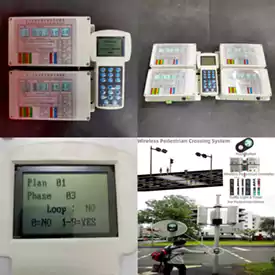
5-Output Wireless Solar Pedestrian Crossing Controller
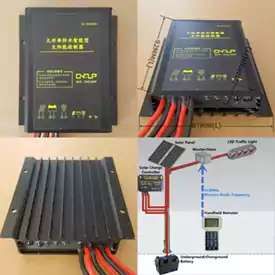
12V24V 10A Adaptive Charge Controller For Solar Traffic Controller
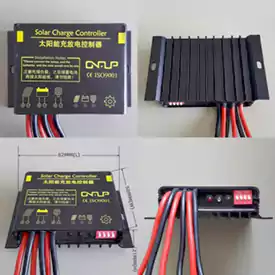
12V 5A Solar Charge Controller For Solar Traffic Controller
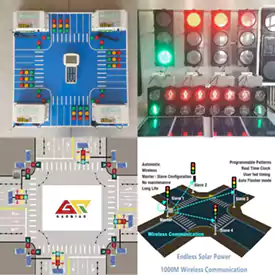
44-Output Wireless Solar Traffic Light Controller
22-Output Wireless Solar Traffic Signal Controller