Why select us
Nanjing Gaoqiao Traffic Technology Co., Ltd
NJGQ has 17 years history in traffic light design and making since 2006, we also have partnered with Siemens (China) since 2016.Our focus and advantages are: traffic light & traffic light controller, whether it is normal power or solar power, portable or mobile, normal or solar warning traffic light, all kinds of traffic signal board, as well as light poles
Explore page
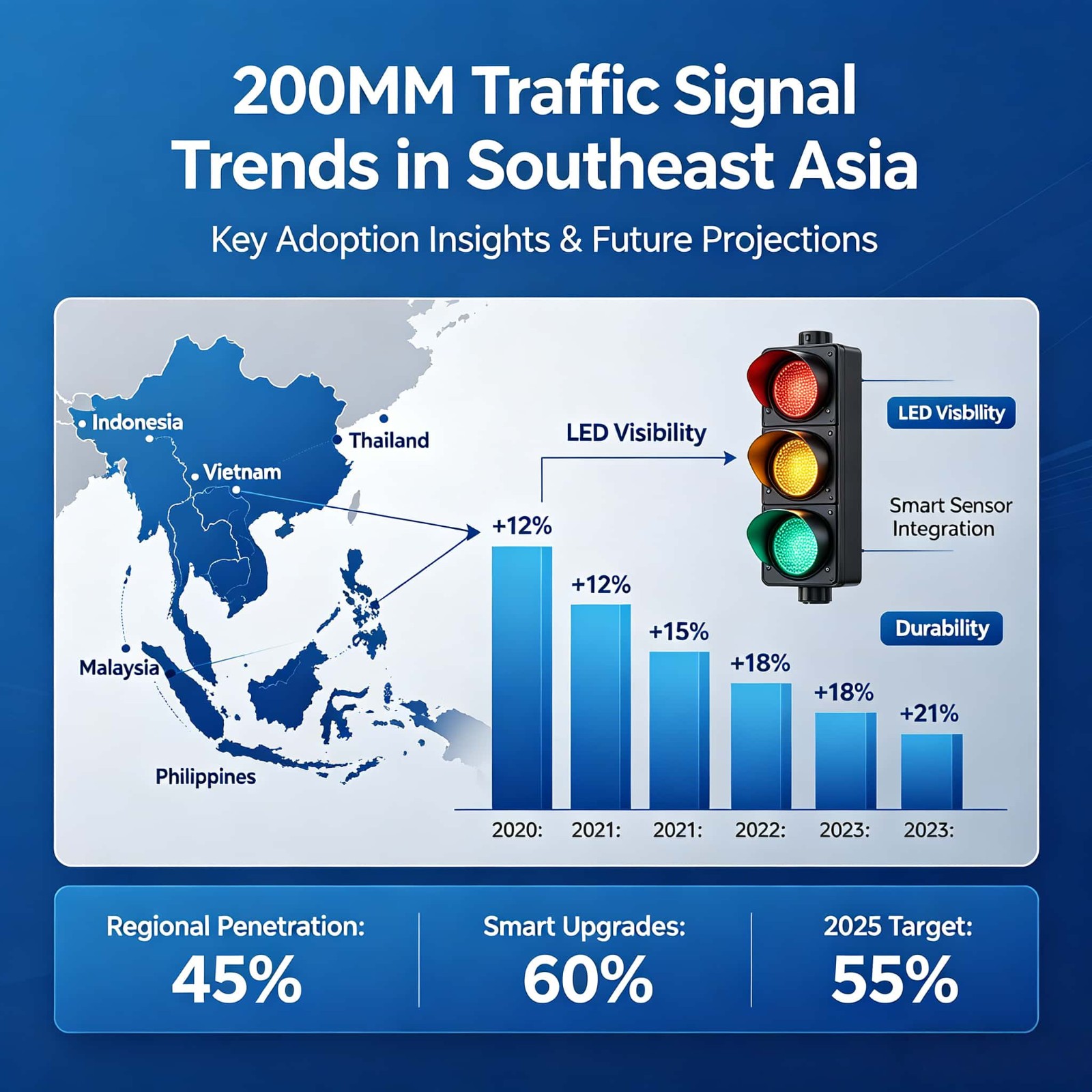
Traffic Lights in Southeast Asia: Usage Habits, Reasons & Market Trends
date:2026-05-07 13:28:45
Southeast Asia features unique road conditions, motorcycle-dominated traffic, fast urbanization and tropical climate. Traffic light selection and application in this region follow distinct local habits, practical demands and market rules. Understanding its usage characteristics, core reasons and future trends is essential for global traffic light suppliers and urban construction partners.
1. Main Usage Habits of Traffic Lights in Southeast Asia
-
Prefer 200mm Standard Traffic LightsMost cities and towns in Southeast Asia widely adopt 200mm LED traffic lights instead of 300mm large-size ones. Compact, lightweight and easy to install, they perfectly fit narrow old streets, dense urban blocks and small and medium intersections.
-
Two Traffic Modes: Left-Hand & Right-Hand Traffic
- Left-hand traffic: Singapore, Malaysia, Brunei follow British tradition, with matched signal timing and phase design.
- Right-hand traffic: Thailand, Indonesia, Vietnam, Philippines and Myanmar adopt right-hand traffic. Due to high motorcycle proportion, dedicated two-wheeler signal phases and shorter light cycles are commonly configured.
- Popular Countdown Timer & Pedestrian Control Signals
Countdown traffic lights are extremely popular across Southeast Asia, effectively reducing sudden braking and traffic risks for motorcycles. Developed areas also widely use pedestrian push-button signals to balance vehicle and pedestrian flow.
2. Core Reasons for Local Selection
2.1 Infrastructure & Budget Factors
Most Southeast Asian cities have narrow road layouts left over from historical construction. 200mm traffic lights occupy less space, will not block driving sightlines, and do not require heavy installation equipment. Meanwhile, local government projects are cost-sensitive; 200mm LED lights lower production, transportation and later maintenance costs with obvious cost performance advantages.
2.2 Traffic Composition & Safety Demand
Motorcycles account for 60%–80% of road traffic in Southeast Asia. High-brightness 200mm LED lights ensure long-distance clear visibility even in rainy, foggy and strong sunlight conditions. Matched with professional anti-sun phantom design, it effectively avoids driver misjudgment, fully adapting to urban low and medium speed road scenarios.
2.3 Tropical Climate Adaptability
Southeast Asia is hot, humid and rainy all year round. Local traffic lights require strong waterproof, dustproof, UV-proof and anti-aging performance. Standard 200mm LED lights adopt polycarbonate housing, working stably at -40℃~+80℃, perfectly adapting to tropical extreme weather.
3. Future Market Trends in Southeast Asia
-
Popularization of Smart Adaptive Traffic LightsMajor cities such as Singapore, Bangkok and Jakarta are accelerating smart city construction. AI sensing and IoT connected traffic lights have become a trend, realizing real-time timing adjustment, remote monitoring and fault early warning to ease congestion.
-
Unified Standardization & Safety UpgradeMany countries are phasing out old mixed-specification signals and promoting unified standard LED traffic lights and countdown timers to standardize traffic guidance and reduce accident rates.
-
Energy Saving, Environmental Protection & Long Service LifeLED energy-saving traffic lights have basically replaced traditional incandescent products. With low power consumption, long service life and low failure rate, they conform to local energy-saving policies and long-term operation needs.
-
Modular & Easy Maintenance DesignModular structure has become a mainstream demand, supporting quick disassembly and partial replacement, suitable for areas lacking professional maintenance teams in Southeast Asia.
4. Advantages of 200mm LED Traffic Lights for Southeast Asia
- Compact size, suitable for narrow roads and dense intersections
- High cost performance, saving procurement and operation costs
- High brightness & anti-glare, friendly to massive motorcycle traffic
- Tropical weather resistant, waterproof, dustproof and anti-aging
- Compatible with smart system upgrade and modular maintenance
Conclusion
Southeast Asia’s traffic light market is driven by road features, traffic structure, budget cost and tropical climate. 200mm LED traffic lights have become the mainstream choice by virtue of adaptability, economy and reliability. With continuous urbanization and smart city development, high-quality, standardized and intelligent LED traffic lights will see growing market demand in Southeast Asia.
Nanjing Gaoqiao Traffic Technology Co., Ltd
20-year manufacturer since 2006 | Siemens Partner
Professional customized LED traffic lights for Southeast Asian market
Always On Your Way, Always Protect You! Top Chinese Traffic Light Manufacturer: NJGQ
ur focus and advantages are: traffic light & traffic light controller, whether it is normal power or solar power, portable or mobile, normal or solar warning traffic light, all kinds of traffic signal board, as well as light poles.