Why select us
Nanjing Gaoqiao Traffic Technology Co., Ltd
NJGQ has 17 years history in traffic light design and making since 2006, we also have partnered with Siemens (China) since 2016.Our focus and advantages are: traffic light & traffic light controller, whether it is normal power or solar power, portable or mobile, normal or solar warning traffic light, all kinds of traffic signal board, as well as light poles
Explore page
High Power SMD vs Regular SMD for Traffic Signals: Differences, Pros & Cons
date:2026-04-02 16:12:35
The choice of LED chips directly impacts traffic signal safety, reliability, and costs. High Power SMD LEDs andRegular SMD LEDs are the two main options, with distinct performance and applications—critical for municipalities and traffic manufacturers. This guide simplifies their key differences to help you choose wisely.
What Are These Two SMD Technologies?
Both are surface-mount LEDs, but tailored for different traffic signal needs:
1. Regular SMD LEDs
Low-power chips (0.03W–0.2W per chip, e.g., 3528, 2835) for basic setups. Budget-friendly, easy to integrate, and suitable for moderate visibility needs.
2. High Power SMD LEDs
High-performance chips (1W–3W per chip, e.g., 3030, 5050), focusing on 3W for maximum brightness. Require advanced thermal management (aluminum MCPCB boards) for long-distance visibility and harsh conditions.
Visual Comparison (Infographic Insert)
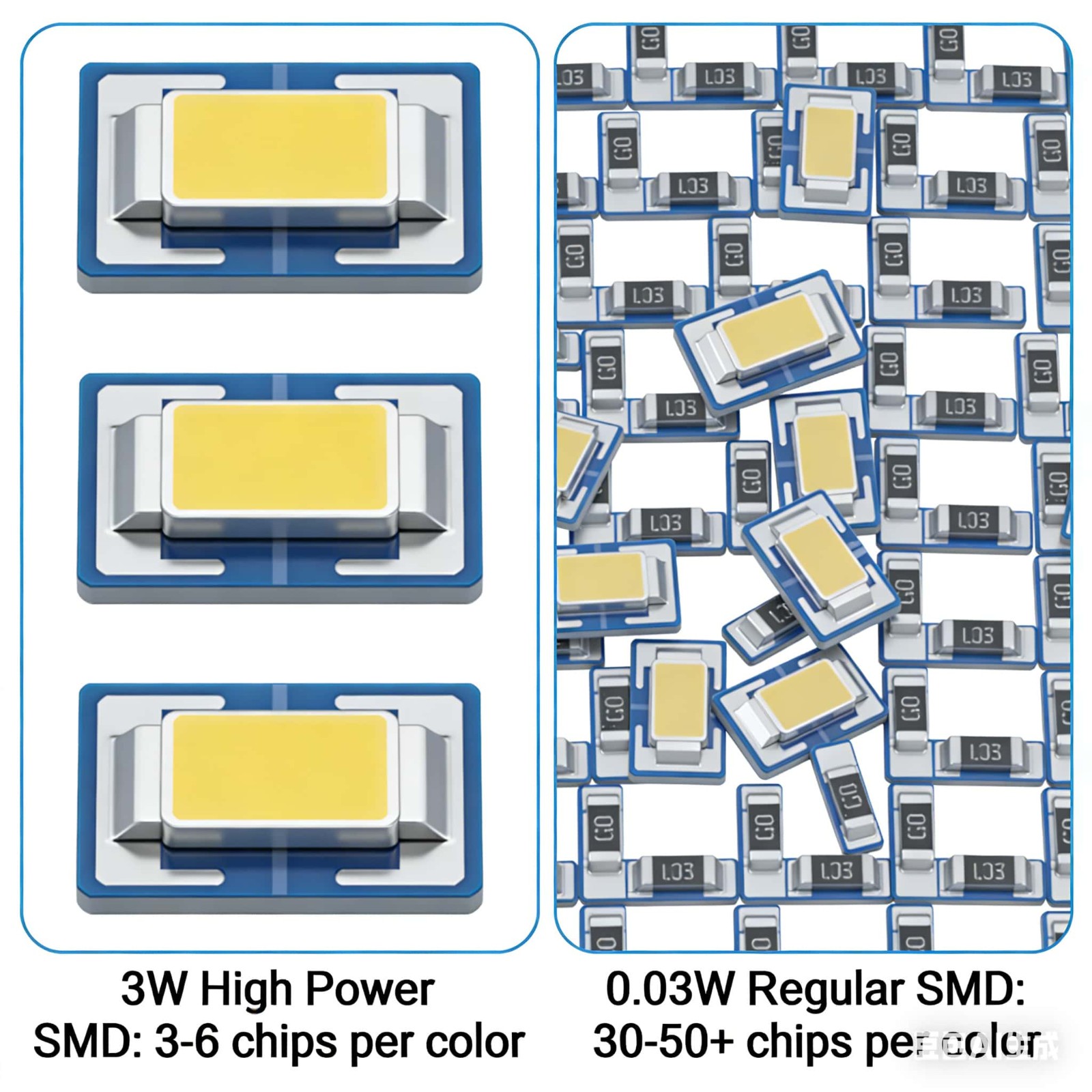
Insert Square Infographic Here: Side-by-side traffic signals—3 High Power SMD chips (3W) vs. multiple Regular SMD (0.03W). Label brightness and compact design differences.
High Power SMD uses 3–6 chips per color (vs. 30–50+ for Regular SMD), simplifying manufacturing and boosting reliability.
Key Differences
|
Feature
|
Regular SMD
|
High Power SMD
|
|
Power per Chip
|
0.03W–0.2W
|
1W–3W
|
|
Chips per Color
|
30–50+
|
3–6
|
|
Visibility
|
Up to 200m (urban use)
|
500m+ (highways)
|
|
Lifespan
|
~50,000 hours
|
50,000–100,000 hours
|
|
Cost
|
Low upfront
|
Higher upfront, lower long-term
|
Pros & Cons of High Power SMD
Insert Image Here: Close-up of 3 High Power SMD chips (red/yellow/green). Caption: "3W High Power SMD: Bright & Reliable for High-Demand Traffic."
Pros
- Unmatched visibility (3–10x brighter) for highways and harsh weather.
- Longer lifespan (up to 100k hours) and lower maintenance costs.
- Energy-efficient (fewer chips = less total power use).
- Compact design, flexible for custom signals.
Cons
- Higher upfront cost; not ideal for tight budgets.
- Needs advanced thermal design (heat sinks/MCPCB).
- Overkill for low-traffic, short-distance signals.
Pros & Cons of Regular SMD
Insert Image Here: Traffic signal with multiple Regular SMD chips. Caption: "Regular SMD: Cost-Effective for Urban Traffic."
Pros
- Low upfront cost, perfect for budget projects.
- Simple cooling (no heat sinks needed).
- Sufficient for urban intersections/pedestrian signals.
Cons
- Limited visibility in sunlight/long distances.
- Shorter lifespan (~50k hours) = more replacements.
- Dozens of chips = more failure points.
Which Should You Choose?
Choose High Power SMD If:
- You need signals for highways, airports, or high-sunlight areas.
- You prioritize long-term savings and reliability.
Choose Regular SMD If:
- You’re working on budget-friendly urban projects.
- Signals are for low-traffic, short-distance use.
Conclusion
Regular SMD is affordable for standard urban signals; High Power SMD excels in high-demand, safety-critical scenarios. Choosing the right one ensures safer roads and lower long-term costs.
Always On Your Way, Always Protect You! Top Chinese Traffic Light Manufacturer: NJGQ
ur focus and advantages are: traffic light & traffic light controller, whether it is normal power or solar power, portable or mobile, normal or solar warning traffic light, all kinds of traffic signal board, as well as light poles.