OEM Traffic Light Wiring and Labels: Confirm the Details Before Batch Production
OEM traffic light approval should cover the electrical connection and the product identification together. A module may look correct yet still require rework if its leads, terminal arrangement or label information differ from the buyer’s approved specification.
For buyers comparing an OEM traffic light manufacturer, a controlled drawing and a signed-off label proof provide more useful information than a general promise of customization. They define what the factory is being asked to repeat across the order.
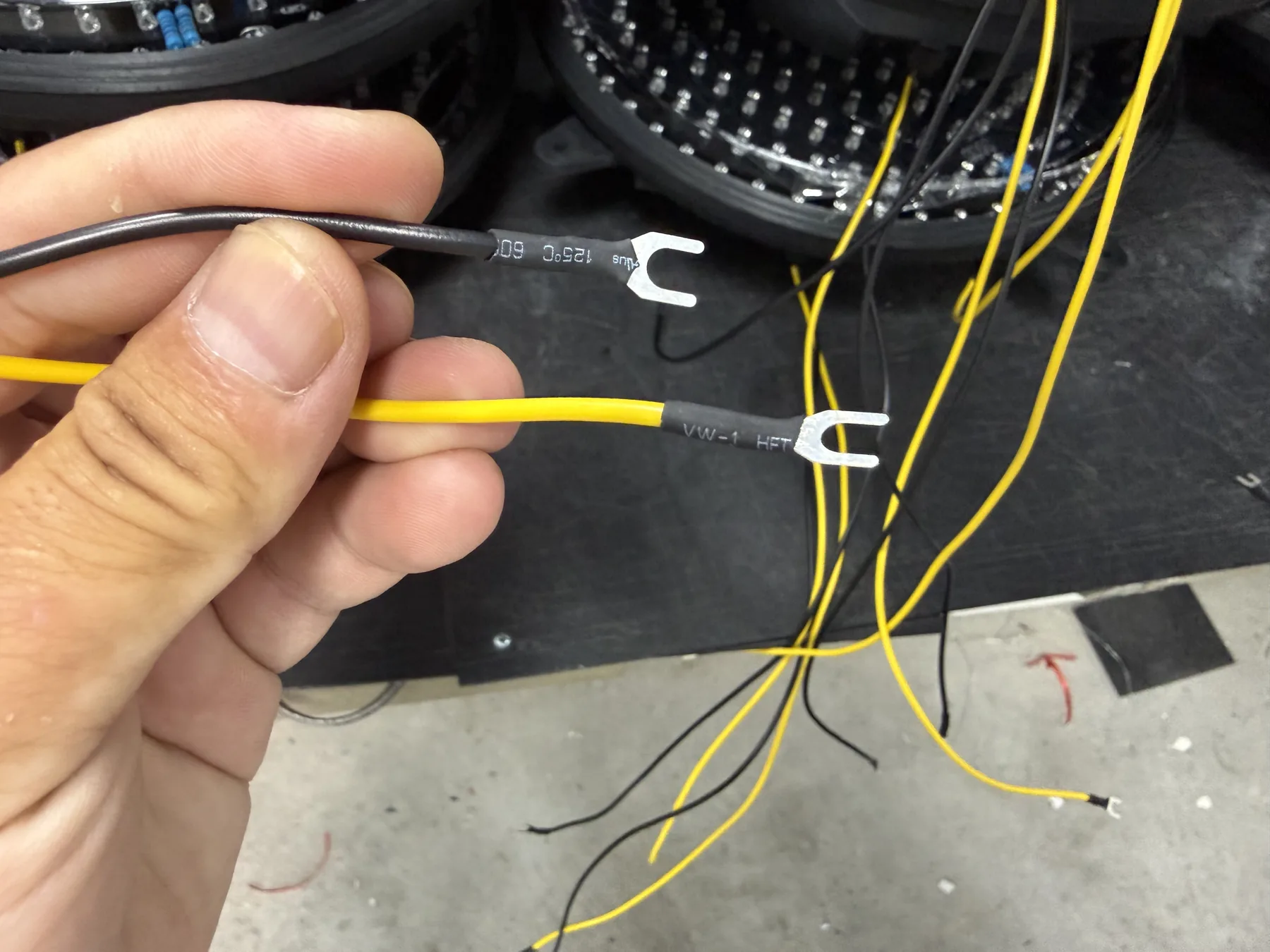
Factory detail from the 300mm module photographs: fork terminals and insulating sleeves are visible. Wire color alone does not identify conductor function.
Define each conductor by function
Use a connection table that identifies the terminal or pin, conductor function, wire identification and the drawing revision. For DC configurations, specify polarity where applicable. For other configurations, use the connection designations required by the approved electrical design.
Do not infer voltage, polarity or signal color from the yellow, black or red insulation visible in a photograph. The wiring diagram must be the controlling reference. If a buyer’s existing installation uses a different color convention, resolve it during approval instead of leaving the installer to interpret it on site.
Specify the connection interface
For the terminal style illustrated above, the mating connection matters as much as appearance. Confirm the terminal dimensions, conductor specification, lead length and tolerance, insulation arrangement and required identification. Where a connector is used, identify its mating part and pin assignment.
The approval sheet should also distinguish a replacement module from a complete signal head. These can have different assembly boundaries and connection requirements even when the optical diameter is described as 300mm.
Approve product labels and carton marks separately
On a small screen, swipe the table to see every column.
| Approval item | Information to confirm |
|---|---|
| Product identity | Model designation and buyer-approved product name |
| Electrical information | Ratings appropriate to the approved configuration |
| Wiring reference | Connection identification or reference to the current drawing |
| OEM artwork | Approved logo file, dimensions, location and orientation |
| Traceability | Agreed batch or serial identification format |
| Carton marks | Item code, quantity and any agreed handling or destination information |
A carton mark cannot replace the identification needed on the product. Likewise, a logo proof does not establish technical compliance. Include conformity marks only when their use is supported for the specific product and destination.
Control changes after approval
A practical approval package consists of the wiring drawing, label artwork and a photograph or sample showing the agreed arrangement. Give each controlled item a revision reference. When a change is requested, record what changed and which production quantity it affects.
For repeat orders, confirm whether the previous revision still applies. A request for “the same as last time” can hide changes to a connector, customer item code or packaging label. Clear revision references reduce this ambiguity without requiring a lengthy specification to be rewritten for every order.
Keep the evidence useful and confidential
A public example can show the terminal detail, label layout and revision relationship while removing the customer’s identity, order number and delivery address. This demonstrates the approval method without exposing buyer information. The factory photograph here illustrates the hardware detail; it is not a signed approval or a completed pull-test record.
See the OEM logo and label placement guide for the related artwork topic and the 300mm production overview for the batch context.
Preparing an OEM order? Send your wiring drawing, terminal requirement and label artwork with the product quantity so the approval requirements can be reviewed together.