
Updated 22 October 2026 · GAOQIAO Traffic Technology
Traffic light size, also called stop light size, usually refers to the nominal diameter of the signal face. The 200mm and 300mm catalogue classes are commonly labelled 8 inch and 12 inch. These labels do not describe the overall signal head or guarantee that a replacement module fits an existing housing.
Choosing between a 200mm and a 300mm LED traffic light starts with the approved project specification, followed by the dimensions and optical evidence for the proposed model. This guide covers the purchasing checks; our 8-inch, 12-inch and 16-inch traffic light size comparison gives a short explanation of the size labels.
200mm vs 300mm: compare the face and the complete assembly
| Check | 200mm version | 300mm version |
|---|---|---|
| Nominal catalogue face size | 200mm / 8 inch | 300mm / 12 inch |
| Round or arrow indication | Confirm the required pattern and colour | Confirm the required pattern and colour |
| Housing and module fit | Use the model-specific outer dimensions and retaining details | Use the model-specific outer dimensions and retaining details |
| Bracket and visor clearance | Check mounting holes, depth and maintenance access | Check mounting holes, depth and maintenance access |
| Electrical and optical evidence | Request documents for the specified 200mm configuration | Request documents for the specified 300mm configuration |
| Published model range | Browse 200mm LED traffic lights | Browse 300mm LED traffic lights |
Begin with the governing drawing
Find the signal schedule and the specification issued for the project. Confirm whether they prescribe a size or permit alternatives. If a replacement differs from the approved size, obtain the necessary review before changing the order.
For an existing installation, distinguish the diameter of the illuminated area from the external module diameter and housing dimensions. These measurements may differ. A front photograph often fails to show the retaining ring, internal depth or cable clearance.
Compare the full installation envelope
Use a side-by-side record rather than a single diameter field:
| Item | Record for each proposed option |
|---|---|
| Optical size | Approved nominal diameter and indication |
| Assembly | Head dimensions, aspect arrangement and visor |
| Mounting | Bracket interfaces and drawing references |
| Electrical version | Supply, controller interface and wiring revision |
| Evidence | Applicable optical and environmental documentation |
| Maintenance | Access method and replacement component reference |
A larger proposed head can change clearance around brackets or maintenance access. Retained structural supports should be reviewed by the project team for the chosen assembly; a product-size comparison does not establish structural adequacy.
Check the module and the complete head separately
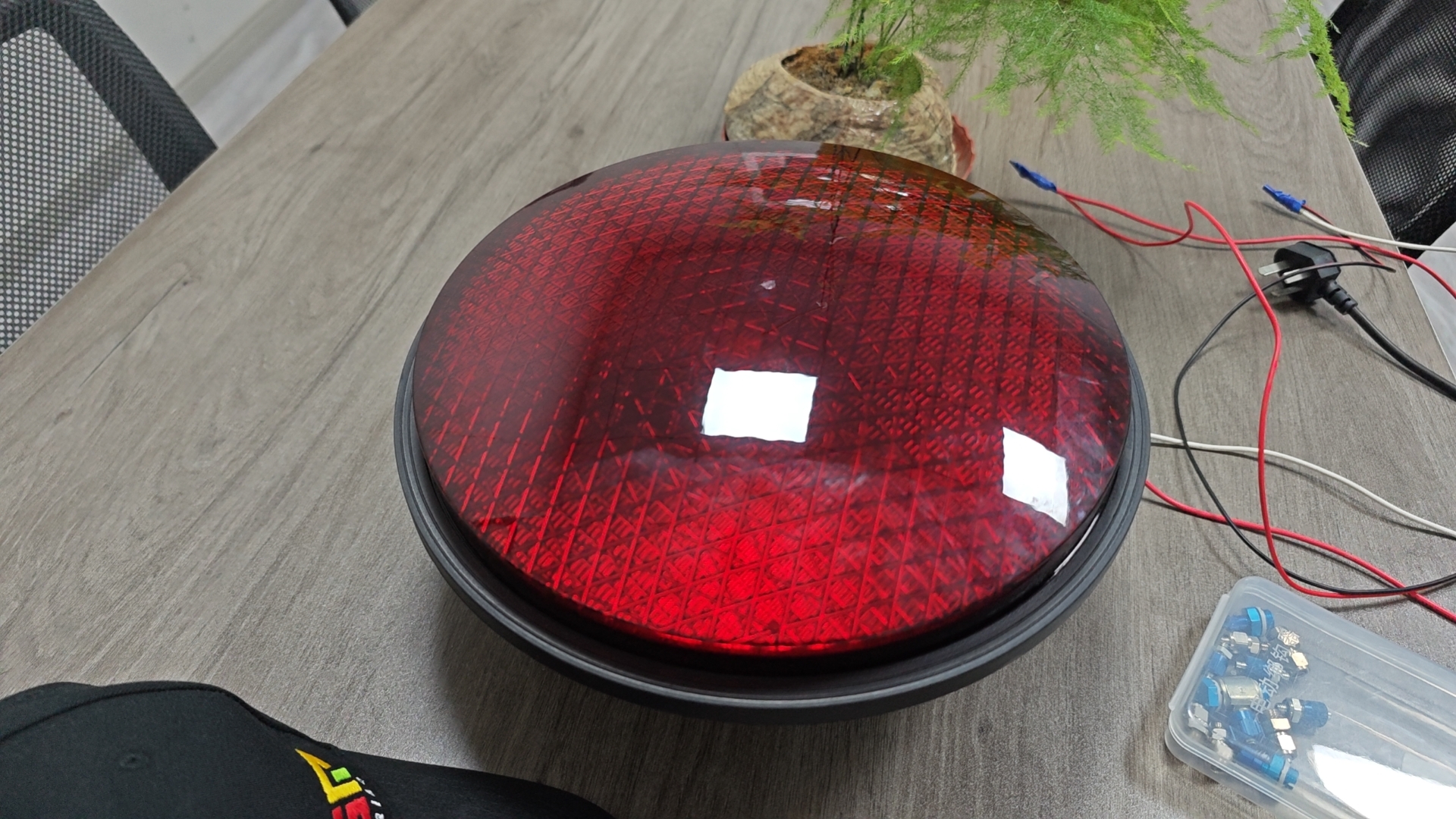
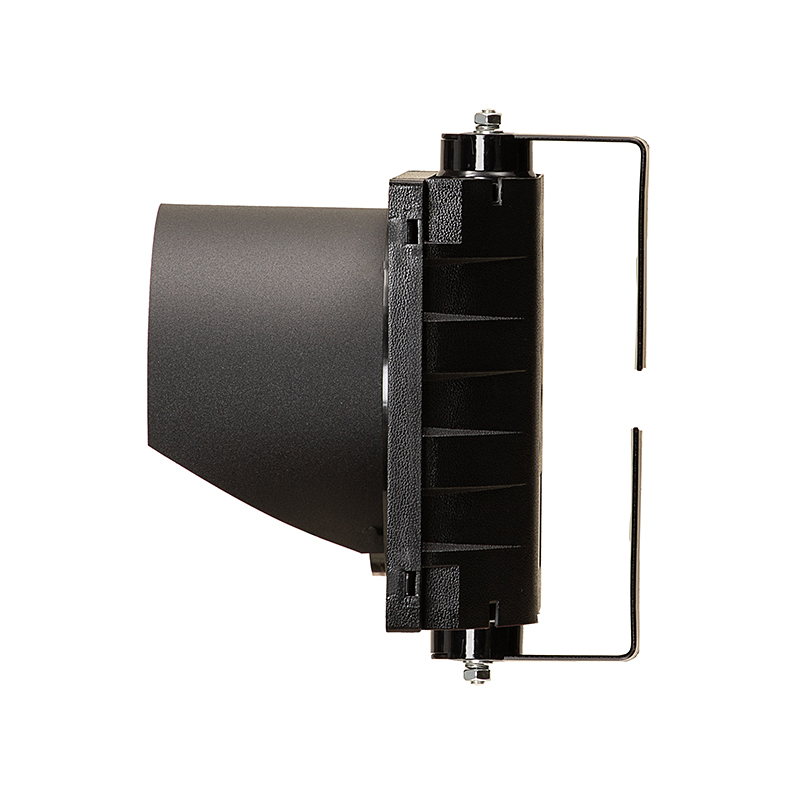
These product photographs illustrate the difference between a separate optical module and a signal housing with a visor and mounting hardware. They are not a measured 200mm-versus-300mm comparison; use the selected model’s dimensioned drawing to confirm size and fit.
Review optical performance separately
Ask for the evidence required by the destination specification. A photograph taken at night or a statement that a lamp is brighter does not show its performance across the specified viewing directions and operating conditions.
When comparing a ball indication with an arrow, use documentation for the actual pattern. Do not transfer conclusions from one optical arrangement to another simply because both are 300mm.
Keep procurement options traceable
If the engineer permits both sizes, request separate quotations with identical supply boundaries. Record what changes: head, bracket, module, visor or other items. This prevents a lower quotation for a partial assembly from appearing cheaper than a complete alternative.
For a multi-site order, keep each approved option attached to its intersection or location reference. Avoid allowing a warehouse description such as “red lamp” to replace the full model and revision.
When the project specifies a 400mm traffic light
If the approved signal schedule calls for a 400mm traffic light, compare the available 400mm and 500mm LED traffic light models. Confirm the indication, assembly dimensions, mounting interface and electrical version for the selected model. Do not substitute a larger signal face for a 200mm or 300mm design without the project’s required approval.
Prepare a comparable 200mm or 300mm quotation
Use one configuration line for each size and indication. If both sizes are permitted, request two options with the same supply scope so the prices can be compared fairly.
Download the English enquiry template
Fill in the drawing reference, face size, indication, voltage, quantity and destination. Attach front, rear and side photographs for replacement enquiries, then send your requirements to sky-sale@njgq.net or contact GAOQIAO.
Questions before you choose a signal size
Can a 300mm module replace a 200mm module in the same housing?
Do not assume it can. Compare the proposed module’s outer dimensions, depth, retaining points and electrical connections with the existing housing. A change in nominal face size needs a fit review and any approval required by the project.
Does a larger face automatically mean better visibility?
Diameter alone is not enough to establish optical performance. Compare the actual indication and its model-specific documentation against the viewing and performance requirements in the project specification.
Should I order a complete head or a replacement module?
Specify a complete head when the order requires the housing and assembled signal sections; list brackets and accessories explicitly. For a module-only replacement, provide the existing module label, retaining details and housing measurements. Confirm the exact supply scope in the quotation.
What to send the manufacturer
Record dimensions in millimetres and include the drawing revision. For retrofit enquiries, photograph the mounting holes, module retaining points and cable clearance as well as the front face.
Provide the drawings, size requirement, indication, aspect count, electrical data and photographs of retained equipment. Include quantity by configuration, not just the total number of lights.
Compare GAOQIAO’s 200mm range and 300mm range, then use the LED traffic light buying guide to complete the wider specification. Email sky-sale@njgq.net for a review of your required configuration.
Explore LED traffic light products · 200mm products · 300mm products
From size selection to dimensional acceptance
Carry the chosen nominal size into the approved assembly drawing and order line. Before accepting the delivered equipment, check the complete housing envelope, mounting points, visor projection and cable-entry position against that drawing. Ask for clarification where tolerances or acceptance criteria are missing.
Use the traffic light dimensions receiving checklist to organise measurements and photographs. For mixed-size shipments, keep separate configuration and carton identifiers.