LED Traffic Signal Lights: Regional Standards and Global Compatibility - Complete Guide
Introduction
When sourcing LED traffic signal lights for international markets, understanding regional standards and compatibility requirements is crucial. Different countries and regions have specific regulations regarding traffic signal specifications, colors, and technical parameters. This comprehensive guide will help you navigate the global market and choose the right LED traffic signal lights for your region.
1. Understanding Regional Traffic Signal Standards
1.1 International Standards Overview
Traffic signal standards vary significantly across different regions. Here's a breakdown of major market requirements:
| Region | Standard | Key Requirements |
|---|
| Europe | EN 12368 | CE marking, specific brightness levels |
| USA | ITE | MUTCD compliance |
| China | GB 14887-2011 | CCC certification |
| Australia | AS 2144 | RMA standards |
| Middle East | UAE/SASO | Specific color temperatures |
1.2 Key Technical Parameters
Different regions require different technical specifications:
Voltage Requirements:
- 110V: USA, Japan, Taiwan
- 220V: China, Europe, Most Asian countries
- 240V: UK, Australia, Singapore
Frequency:
- 60Hz: USA, Japan, Korea
- 50Hz: China, Europe, Most other countries
2. Regional Color Standards
2.1 Universal Colors
Most countries follow the universal traffic light color system:
- 🔴 Red: Stop
- 🟡 Yellow: Caution
- 🟢 Green: Go
2.2 Regional Variations
Some regions have unique requirements:
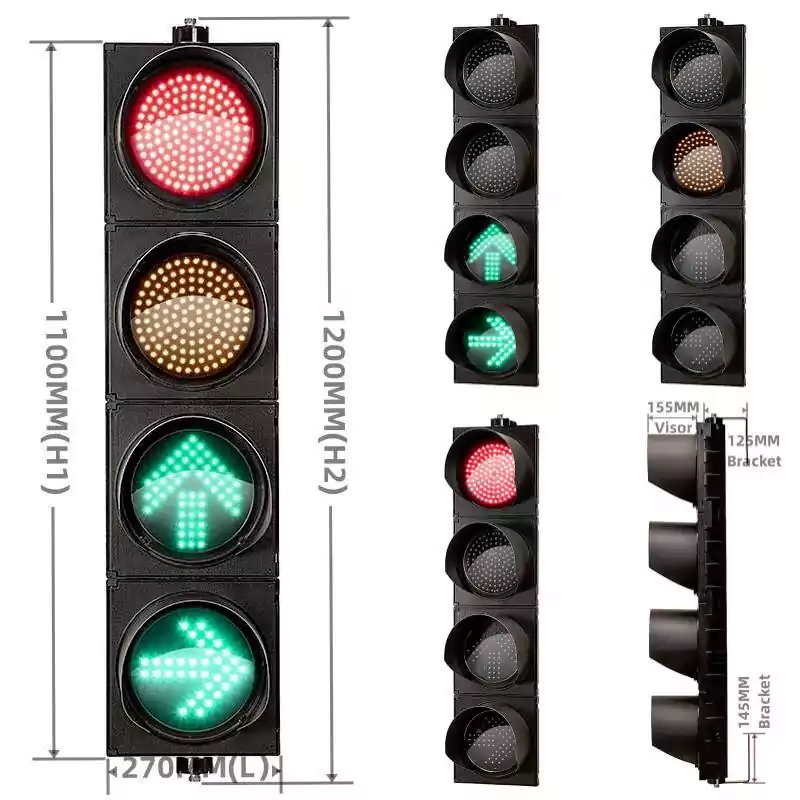
Special Arrangements:
- Some European countries allow simultaneous red and yellow
- Flashing green arrow phases
- Specific pedestrian signal patterns in Japan
- Emergency vehicle preemption signals in North America
3. Size and Visibility Standards by Region
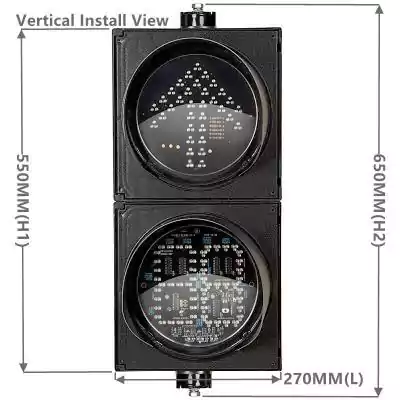
3.1 Common Sizes
| Size | Applications | Popular Regions |
|---|
| 100mm (4 inch) | Parking lots, low-speed areas | Global |
| 200mm (8 inch) | Urban roads, collector streets | China, Asia, Europe |
| 300mm (12 inch) | Highways, major intersections | USA, Global |
| 400mm (16 inch) | High-speed roads, airports | Specialized applications |
3.2 Visibility Requirements
Different regions mandate minimum visibility distances:
- Urban areas: 200-300 meters
- Highways: 500+ meters
- School zones: Enhanced visibility required
4. Certification Requirements by Region
4.1 Mandatory Certifications
| Region | Certification | Notes |
|---|
| China | CCC | Mandatory for domestic sale |
| Europe | CE | Required for EU market |
| USA | UL/FCC | Market access requirements |
| Australia | RCM | Regulatory compliance |
| Middle East | SASO | Saudi Arabia standards |
4.2 Quality Certifications (Optional but Recommended)
- ISO 9001: Quality management system
- IP Rating: IP65 or higher for outdoor use
- RoHS: Environmental compliance
- REACH: Chemical safety
5. 200mm LED Traffic Lights: The Versatile Choice
Why 200mm (8 Inch) Traffic Lights?
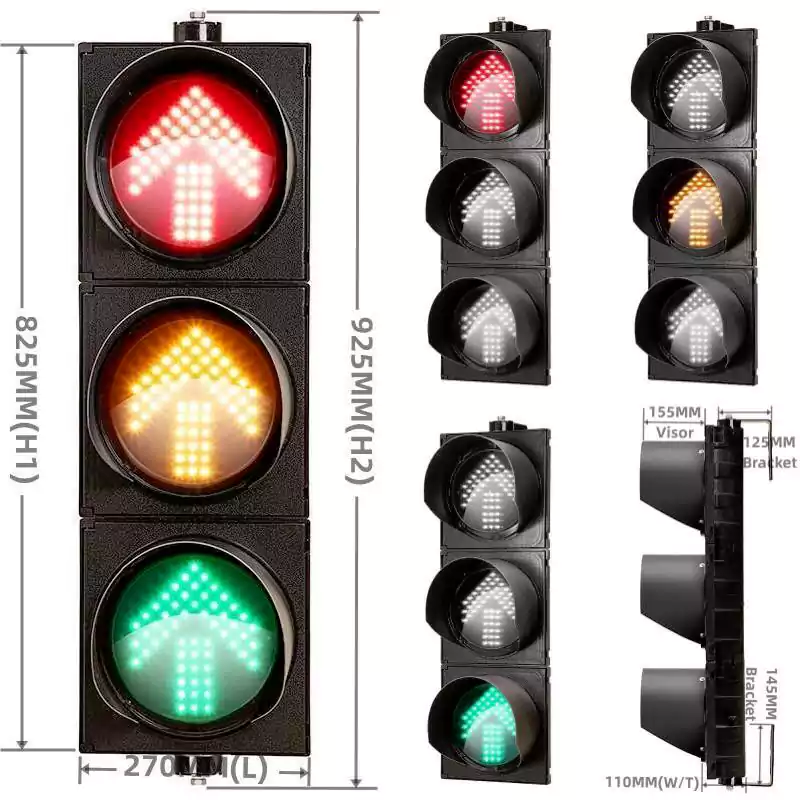
The 200mm LED traffic light has become the global standard for urban roads and collector streets. Here's why:
Advantages:
- ✅ Optimal visibility for speeds up to 60 km/h
- ✅ Suitable for most urban intersection applications
- ✅ Lower cost compared to 300mm models
- ✅ Widely accepted in international markets
Applications:
- Urban collector streets
- Parking facilities
- School zones
- Industrial areas
- Residential neighborhoods
6. Customization Options for Global Markets
6.1 OEM/ODM Services
When sourcing for specific markets, consider manufacturers offering:
| Service | Description |
|---|
| Custom voltage adaptation | 110V/220V/240V options |
| Language localization | Multi-language instruction labels |
| Certification support | Assistance with local certifications |
| Custom branding | Logo and packaging options |
6.2 Technical Customization
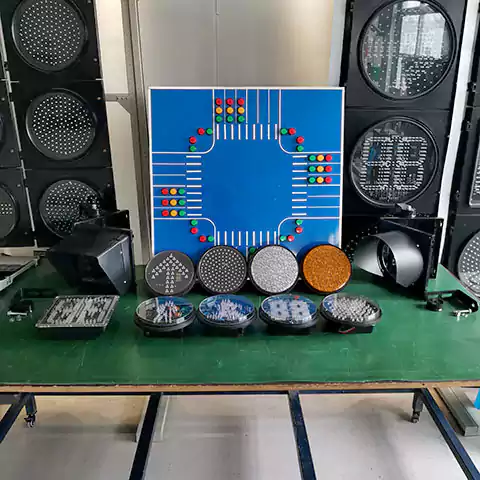
- Lens patterns for specific visibility requirements
- Controller compatibility with local systems
- Mounting configurations for different pole types
7. How to Choose the Right Supplier
7.1 Key Selection Criteria
| Factor | What to Look For |
|---|
| Experience | 10+ years in traffic signal manufacturing |
| Export experience | Proven track record in your target market |
| Certifications | Relevant certifications for your region |
| Production capacity | Ability to meet your volume requirements |
| Quality control | ISO 9001 or similar quality systems |
7.2 Questions to Ask Suppliers
- What certifications do your products have for [target market]?
- Can you provide voltage options for [specific country]?
- Do you offer customization for local standards?
- What is your lead time for [order quantity]?
- Can you assist with local certification processes?
8. Case Studies: Successful Global Deployments
8.1 European Project
- Location: Germany
- Product: 200mm LED traffic lights
- Standards Met: EN 12368, CE, RoHS
- Outcome: Successful deployment in 15 cities
8.2 Middle East Project
- Location: UAE
- Product: Solar-powered traffic signals
- Standards Met: SASO, IP67 rating
- Outcome: Operating in extreme temperatures (50°C+)
8.3 Australian Project
- Location: Sydney
- Product: 300mm LED traffic lights
- Standards Met: AS 2144, RCM
- Outcome: Featured in urban traffic management system
9. Installation and Maintenance
9.1 Installation Guidelines
- Site Survey: Verify power supply and pole compatibility
- Voltage Check: Ensure correct input voltage
- Alignment: Proper vertical and horizontal positioning
- Testing: Full system functionality test before operation
9.2 Maintenance Tips
- Regular cleaning of lens surfaces
- Quarterly electrical inspections
- Annual comprehensive system checks
- Spare parts inventory for critical components
Conclusion
Understanding regional standards is essential when sourcing LED traffic signals for global markets. The 200mm (8 inch) LED traffic light offers excellent versatility and is widely accepted across different regions.
Key Takeaways:
- ✅ Research specific regional requirements before purchasing
- ✅ Ensure products have necessary certifications for target market
- ✅ Choose experienced manufacturers with export expertise
- ✅ Consider voltage and frequency compatibility
- ✅ Plan for customization if needed
Contact Us:
With 17 years of experience in LED traffic signal manufacturing, we are committed to providing high-quality products that meet international standards for customers worldwide.