
Introduction
When sourcing LED traffic signal lights for international markets, understanding regional standards and compatibility requirements is crucial. Different countries and regions have specific regulations regarding traffic signal specifications, colors, and technical parameters. This comprehensive guide will help you navigate the global market and choose the right LED traffic signal lights for your region.
1. Understanding Regional Traffic Signal Standards
1.1 International Standards Overview
Traffic signal standards vary significantly across different regions. Here’s a breakdown of major market requirements:
| Region | Standard | Key Requirements |
|---|---|---|
| Europe | EN 12368 | CE marking, specific brightness levels |
| USA | ITE | MUTCD compliance |
| China | GB 14887-2011 | CCC certification |
| Australia | AS 2144 | RMA standards |
| Middle East | UAE/SASO | Specific color temperatures |
1.2 Key Technical Parameters
Different regions require different technical specifications:
Voltage Requirements:
- Verify the actual nominal voltage and frequency at the destination in the USA, Japan or Taiwan; do not assume one 110V specification covers all three.
- Verify the nominal supply voltage, frequency and permitted tolerance for the destination and selected product; do not assume a single 220V supply specification for China, Europe and most Asian countries.
- For the UK, Australia or Singapore, confirm the actual site supply voltage, frequency and permitted range before selecting the electrical version.
Frequency:
- 60Hz: USA, South Korea and western Japan; eastern Japan uses 50Hz. Confirm the site supply frequency.
- 50Hz: China, Europe, Most other countries
2. Regional Color Standards
2.1 Universal Colors
Most countries follow the universal traffic light color system:
- 🔴 Red: Stop
- 🟡 Yellow: Caution
- 🟢 Green: Go
2.2 Regional Variations
Some regions have unique requirements:
Special Arrangements:
- Some European countries allow simultaneous red and yellow
- Flashing green-arrow operation only where the local rules and approved signal plan permit it
- Specific pedestrian signal patterns in Japan
- Emergency vehicle preemption signals in North America
3. Size and Visibility Standards by Region
3.1 Common Sizes
| Size | Applications | Popular Regions |
|---|---|---|
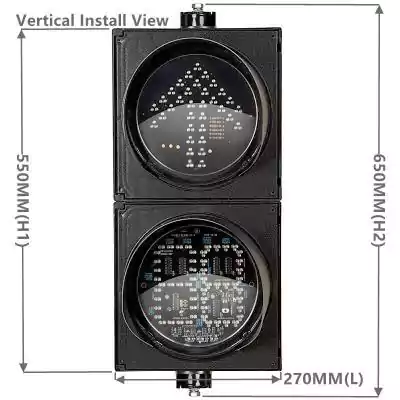
| 100mm (4 inch) | Parking lots, low-speed areas | Global |
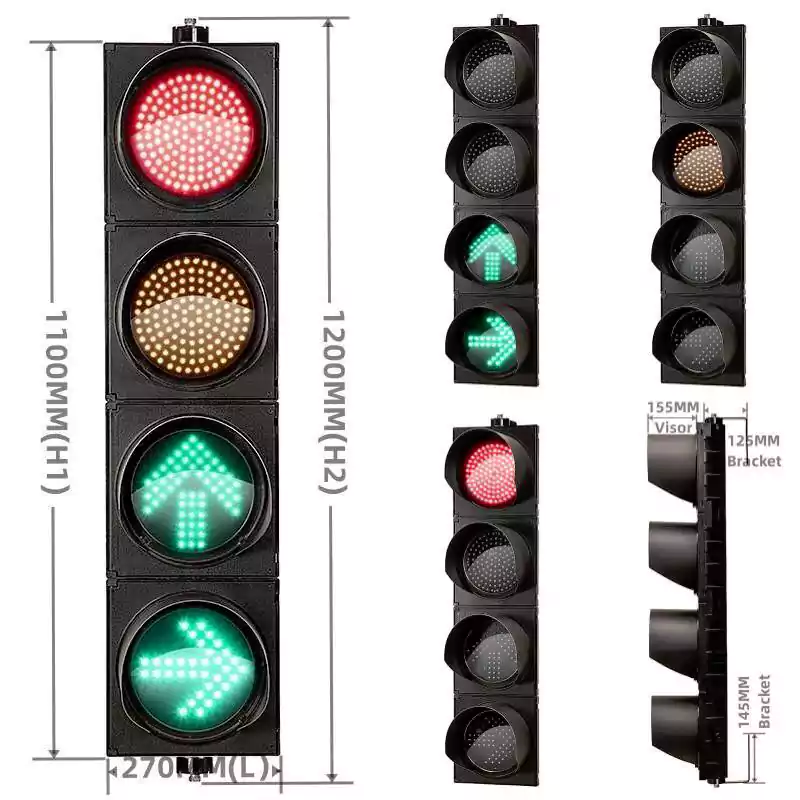
| 200mm (8 inch) | Urban roads, collector streets | China, Asia, Europe |
| 300mm (12 inch) | Highways, major intersections | USA, Global |
| 400mm (16 inch) | High-speed road and airport-road projects: assess the approved application requirements | Specialized applications |
3.2 Visibility Requirements
Confirm the visibility requirements adopted for the destination and installation. The applicable standard, approach conditions and authority-approved design determine the assessment; do not treat a regional summary as a universal minimum-distance rule.
- Urban areas: determine the required visibility from the approved site design and applicable rules.
- Highways: Verify the required and documented visibility for the selected model and site; 500+ meters is not guaranteed for every installation
- School zones: Enhanced visibility required
4. Certification Requirements by Region
4.1 Mandatory Certifications
| Region | Certification | Notes |
|---|---|---|
| China | CCC | Confirm whether the selected product falls within a mandatory domestic certification scheme under the applicable current rules. |
| Europe | CE | Confirm the applicable EU market requirements for the selected product and intended use. |
| USA | UL/FCC | Market access requirements |
| Australia | RCM | Regulatory compliance |
| Middle East | SASO | Saudi Arabia standards |
4.2 Quality Certifications (Optional but Recommended)
- ISO 9001: Quality management system
- IP Rating: Specify the enclosure protection required for the actual outdoor exposure and verify model-specific test evidence
- RoHS: Environmental compliance
- REACH: Chemical safety
5. 200mm LED Traffic Lights: The Versatile Choice
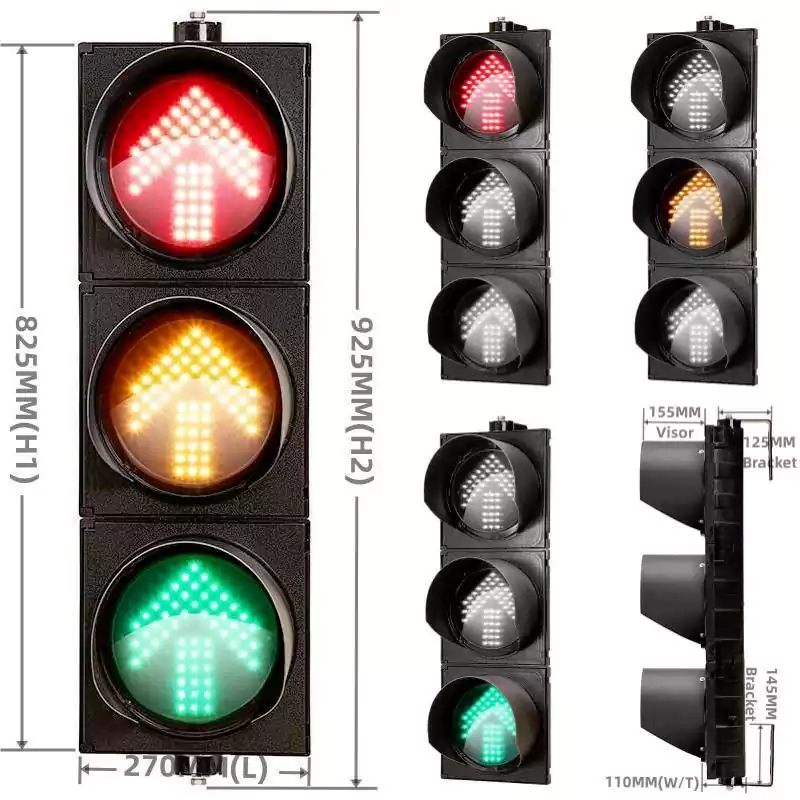
Why 200mm (8 Inch) Traffic Lights?
A 200mm LED signal may suit an urban-road project where its documented performance and the approved layout meet the authority’s requirements. Assess the following selection factors:
Advantages:
- Verify visibility against the approved approach speed and sight-distance requirements
- ✅ Suitable for most urban intersection applications
- ✅ Compare quotations for matched configurations before concluding that the cost is lower than a 300mm model.
- Confirm acceptance requirements for the destination market
Applications:
- Urban collector streets
- Parking facilities
- School zones
- Industrial areas
- Residential neighborhoods
6. Customization Options for Global Markets
6.1 OEM/ODM Services
When sourcing for specific markets, consider manufacturers offering:
| Service | Description |
|---|---|
| Custom voltage adaptation | 110V/220V/240V options |
| Language localization | Multi-language instruction labels |
| Certification support | Confirm the scope and availability of assistance with local conformity requirements. |
| Custom branding | Logo and packaging options |
6.2 Technical Customization
- Lens patterns for specific visibility requirements
- Controller compatibility with local systems
- Mounting configurations for different pole types
7. How to Choose the Right Supplier
7.1 Key Selection Criteria
| Factor | What to Look For |
|---|---|
| Experience | 19 years of traffic signal manufacturing experience |
| Export experience | Proven track record in your target market |
| Certifications | Relevant certifications for your region |
| Production capacity | Ability to meet your volume requirements |
| Quality control | ISO 9001 or similar quality systems |
7.2 Questions to Ask Suppliers
- What certifications do your products have for [target market]?
- Can you provide voltage options for [specific country]?
- Do you offer customization for local standards?
- What is your lead time for [order quantity]?
- Can you assist with local certification processes?
8. Project Evaluation: International Deployment Considerations
8.1 European Project Planning
- Location: Germany
- Product: 200mm LED traffic lights
- Standards Met: EN 12368, CE, RoHS
- Outcome: Confirm project records before claiming successful deployment in 15 cities
8.2 Middle East Project
- Location: UAE
- Product: Solar-powered traffic signals
- Standards Met: verify the destination’s applicable requirements and documented enclosure rating for the selected product.
- Outcome: Confirm the selected model’s documented operating-temperature range before specifying operation at 50°C or above
8.3 Australian Procurement Planning Example
- Location: Sydney
- Product: 300mm LED traffic lights
- Standards Met: AS 2144, RCM
- Outcome: Confirm the documented role in the urban traffic management system
9. Installation and Maintenance
9.1 Installation Guidelines
- Site Survey: Verify power supply and pole compatibility
- Voltage Check: Ensure correct input voltage
- Alignment: Proper vertical and horizontal positioning
- Testing: Full system functionality test before operation
9.2 Maintenance Tips
- Regular cleaning of lens surfaces
- Quarterly electrical inspections
- Annual comprehensive system checks
- Spare parts inventory for critical components
Conclusion
Understanding regional standards is essential when sourcing LED traffic signals for global markets. The 200mm (8 inch) LED traffic light offers excellent versatility and is widely accepted across different regions.
Key Takeaways:
- ✅ Research specific regional requirements before purchasing
- ✅ Ensure products have necessary certifications for target market
- ✅ Choose experienced manufacturers with export expertise
- ✅ Consider voltage and frequency compatibility
- ✅ Plan for customization if needed
Our Products
We specialize in manufacturing high-quality LED traffic signals for global markets.
Shop 200mm LED Traffic Lights →
Contact Us:
- 🌐 Website: www.led-trafficlight.com
- 📧 Email: sky-sale@njgq.net
With 19 years of experience in LED traffic signal manufacturing, we are committed to providing high-quality products that meet international standards for customers worldwide.
Related guides: standards and certification
Continue with these related resources for your traffic signal project.