
Detalles del producto
Información básica:
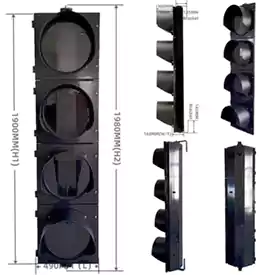
- Dimensiones del producto:
- Lente:
- Longitud de onda:
- Tensión de entrada:
- Fuente de luz:
- Comunicación:
- Factor de potencia:
- Consumo de energía:
Detalles del producto:
"¿Cuánto cuesta un semáforo?" es generalmente la primera pregunta que hacen los compradores, y la más difícil de responder con un solo número. Una señal de bola roja de 200 mm y un sistema de cuenta atrás de 4 aspectos alimentado por energía solar son ambas "luzs comerciales", pero sus precios difieren por un orden de magnitud. Comprender qué conduce el costo le ayuda a comparar las citas con justicia y evitar pagar por las características que no necesita.
Esta guía explica los factores que determinan el precio para que pueda revisar cada partida de una cotización y saber por qué está pagando.
¿Por qué no hay un solo "precio de semáforo"
Una señal de tráfico es un producto configurado, no una mercancía. Dos señales que parecen similares en una foto pueden contener módulos LED muy diferentes, carcasas, controladores y certificaciones. La respuesta honesta a "cuánto cuesta" es siempre "depende de la especificación", por lo que los fabricantes serios piden sus requisitos antes de citar.
Los factores a continuación explican aproximadamente dónde va el dinero y qué opciones mueven el precio más.
Los principales factores de costo
1. Tamaño de la señal y número de aspectos
El tamaño físico es el controlador de costo más visible. Una cabeza de señal de 200 mm (8 pulgadas) utiliza menos LED y menos material de carcasa que una unidad de 300 mm (12 pulgadas) o 400 mm. El número de aspectos —single, 2-aspecto, 3-aspecto o 4-aspecto— multiplica los módulos LED, carcasas y cableado en una sola unidad. Una señal de 4 puntos cuesta sustancialmente más que un solo aspecto del mismo diámetro.
2. Tipo LED y calidad óptica
El módulo LED es el corazón de la señal y una variable de coste mayor. LEDs de grado superior ofrecen una mejor intensidad luminosa, un control de ángulo de visión más estricto y una vida de mayor valor. Conocer un estándar específico, como las clases de intensidad EN 12368 o los requisitos de cromaticidad ITE, requiere mejores LEDs y ópticas más precisas, lo que eleva el costo pero a menudo es obligatorio para los proyectos de carretera pública.
3. Material de carcasa y construcción
Las carcasas de policarbonato son más ligeras y resistentes a la corrosión; las carcasas de aluminio ofrecen mayor resistencia mecánica y disipación de calor. Espesor de pared, estabilización UV, calidad de gaseosa y la clasificación IP del recinto todo afectan el costo. Una carcasa barata que se rompe o se desvanece en dos años cuesta más sobre su vida que una bien hecha.
4. Fuente de alimentación: red eléctrica o solar
La alimentación de red es la configuración de referencia. Un semáforo solar añade panel fotovoltaico, batería, controlador de carga y, con frecuencia, un poste o gabinete de mayor tamaño. La inversión adicional resulta útil cuando abrir zanjas o conectarse a la red eléctrica es costoso o imposible.
5. Controlador e inteligencia
Una simple señal de tiempo fijo necesita una electrónica de control mínima. Un sistema con temporizador de cuenta atrás, detección de vehículos, sincronización inalámbrica, tiempo de adaptación o control remoto añade hardware y software del controlador. Cada capa de inteligencia añade costo pero puede reducir el trabajo y la energía sobre la vida del sistema.
6. Certificación y pruebas
Los productos certificados incorporan el costo de ensayos de laboratorio, documentación y auditorías de fábrica. El cumplimiento de EN 12368 o de una norma equivalente suele ser obligatorio en licitaciones públicas. Un producto sin certificación puede ser más barato al principio, pero mucho más costoso si no supera una inspección.
7. Volumen de pedido y personalización
Caídas de precio unitario con volumen porque los costos de herramientas, configuración y pruebas se distribuyen en más unidades. Colores personalizados, voltajes, logos, hardware de montaje o configuraciones nacionales añaden coste de ingeniería y configuración, especialmente en pedidos pequeños. Un pedido personalizado de 50 piezas tiene un costo por unidad mucho mayor que un estándar de 1.000 piezas.
| Factor de gastos | Costo inferior | Costo superior |
|---|---|---|
| Tamaño | 200 mm | 300–400 mm, aspecto 3–4 |
| LED y óptica | Intensidad estándar | Alta intensidad, EN 12368 / Clase ITE |
| carcasa | Policarbonato estándar | aluminio de servicio pesado, alta calificación IP |
| Poder | Alimentación de red | Solar panel + battery + controller |
| Control | Hora fija | Cuenta atrás, detección, sincronización, control remoto |
| Certificación | Sin certificación | CE / RoHS / EN 12368 / ITE probado |
| Volume | Standard product, large quantity | Custom configuration, small quantity |
Cómo comparar cotizaciones correctamente
Cuando dos cotizaciones difieren mucho, compárelas con la misma especificación. Revise la clase de intensidad LED, el material de la carcasa, el grado IP, la garantía, las certificaciones incluidas y las funciones del controlador. Una oferta aparentemente más barata puede corresponder a una especificación inferior.
Considere también el costo total de propiedad: consumo de energía, vida útil estimada de los LED, disponibilidad de repuestos y costo de una falla prematura. El menor precio unitario rara vez implica el menor costo durante toda la vida útil.
Getting an accurate quote
Para recibir un precio preciso, indique el diámetro, el número de aspectos y colores, la intensidad LED o norma requerida, el material de la carcasa, el tipo de alimentación, las funciones del controlador, la cantidad y el país de destino. Con estos datos, el fabricante puede preparar una cotización comparable y sin suposiciones.
Precio ligero de tráfico FAQ
¿Cuánto cuesta una semáforo LED básica?
Una simple señal de control de 200 mm de potencia simple es la configuración más barata. El precio aumenta con diámetro, número de aspectos, calidad LED, construcción de carcasas y certificación. Contacte con un fabricante con su especificación exacta para una figura exacta.
¿Por qué las semáforos solar son más caras?
Los sistemas solares agregan un panel fotovoltaico, batería, controlador de carga y a menudo un polo y un recinto más fuerte. El costo inicial más alto se compensa cuando la conexión de red requiere una zanja costosa o no está disponible.
¿La certificación aumenta el precio?
Sí. Pruebas a estándares tales como EN 12368 o ITE añade coste de laboratorio y documentación, que se refleja en el precio. A menudo es obligatorio para proyectos y licitaciones de carreteras públicas.
¿Cómo puedo reducir el costo de un pedido grande?
Estándarizar la configuración a través del pedido, aumentar la cantidad por ejecución de producción y evitar la personalización innecesaria. Pregúntele a la fábrica qué especificaciones tienen el mayor impacto de coste y ajuste sólo donde su proyecto permite.
GAOQIAO fabrica semáforos LED de 200 mm, 300 mm y configuraciones solares con servicio OEM/ODM. Examine el rango de semáforo, aprender sobre nuestra fábrica, o enviar su especificación para una cita precisa.
Productos relacionados
Semáforos LED y controladores de tráfico, con alimentación eléctrica o solar, soluciones portátiles, luces de advertencia, paneles de señalización y postes.

Normas Internacionales para Semáforos LED
Carcasas de Semáforo: Policarbonato vs Aluminio
Diseño de Sistema de Semáforo Solar: Dimensionamiento de Panel, Batería y Contro
Especificaciones de Semáforos LED: Voltaje, Potencia e Índice IP
Plazo de Entrega, MOQ y Envío: Importar Semáforos desde China
Semáforos de 200 mm vs 300 mm vs 400 mm: Selección de Tamaño por Tipo de Vía
Certificaciones de Señales de Tráfico: CE, RoHS, EN 12368 e ITE Explicadas
Semáforos OEM vs ODM: Qué Modelo de Personalización Conviene a su Proyecto