
Bản dịch đầy đủ của trang này đang được chuẩn bị. Một số nội dung được hiển thị bằng ngôn ngữ gốc.
Vì sao chọn chúng tôi
Nanjing Gaoqiao Traffic Technology Co., Ltd
NJGQ has 17 years history in traffic light design and making since 2006, we also have partnered with Siemens (China) since 2016.Our focus and advantages are: traffic light & traffic light controller, whether it is normal power or solar power, portable or mobile, normal or solar warning traffic light, all kinds of traffic signal board, as well as light poles
Khám phá trang
High Power SMD vs Regular SMD for Traffic Signals: Differences, Pros & Cons
date:2026-04-02 16:12:35
The choice of LED chips directly impacts traffic signal safety, reliability, and costs. High Power SMD LEDs vàRegular SMD LEDs are the two main options, with distinct performance and applications—critical for municipalities and traffic manufacturers. This guide simplifies their key differences to help you choose wisely.
What Are These Two SMD Technologies?
1. Regular SMD LEDs
2. High Power SMD LEDs
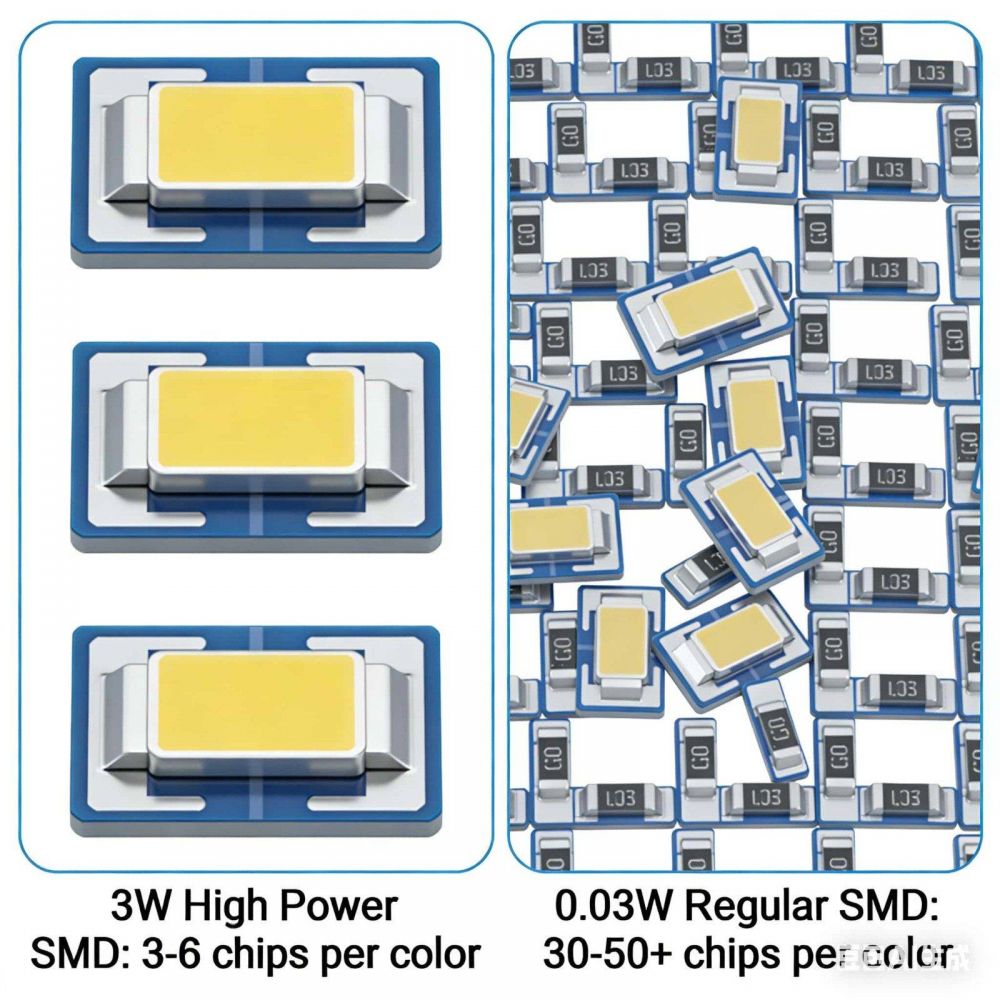
Visual Comparison (Infographic Insert)
Insert Square Infographic Here: Side-by-side traffic signals—3 High Power SMD chips (3W) vs. multiple Regular SMD (0.03W). Label brightness and compact design differences.Key Differences
|
Tính năng
|
Regular SMD
|
High Power SMD
|
|
Power per Chip
|
0.03W–0.2W
|
1W–3W
|
|
Chips per Color
|
30–50+
|
3–6
|
|
Khả năng quan sát
|
Up to 200m (urban use)
|
500m+ (highways)
|
|
Lifespan
|
~50,000 hours
|
50,000–100,000 hours
|
|
Chi phí
|
Low upfront
|
Higher upfront, lower long-term
|
Pros & Cons of High Power SMD
Insert Image Here: Close-up of 3 High Power SMD chips (red/yellow/green). Caption: “3W High Power SMD: Bright & Reliable for High-Demand Traffic.”Pros
- Unmatched visibility (3–10x brighter) for highways and harsh weather.
- Longer lifespan (up to 100k hours) and lower maintenance costs.
- Energy-efficient (fewer chips = less total power use).
- Compact design, flexible for custom signals.
Cons
- Higher upfront cost; not ideal for tight budgets.
- Needs advanced thermal design (heat sinks/MCPCB).
- Overkill for low-traffic, short-distance signals.
Pros & Cons of Regular SMD
Insert Image Here: Traffic signal with multiple Regular SMD chips. Caption: “Regular SMD: Cost-Effective for Urban Traffic.”Pros
- Low upfront cost, perfect for budget projects.
- Simple cooling (no heat sinks needed).
- Sufficient for urban intersections/pedestrian signals.
Cons
- Limited visibility in sunlight/long distances.
- Shorter lifespan (~50k hours) = more replacements.
- Dozens of chips = more failure points.
Which Should You Choose?
Choose High Power SMD If:
- You need signals for highways, airports, or high-sunlight areas.
- You prioritize long-term savings and reliability.
Choose Regular SMD If:
- You’re working on budget-friendly urban projects.
- Signals are for low-traffic, short-distance use.
Kết luận
Luôn đồng hành trên đường, luôn bảo vệ bạn! Nhà sản xuất đèn giao thông hàng đầu Trung Quốc: NJGQ
Trọng tâm và thế mạnh của chúng tôi gồm đèn giao thông và bộ điều khiển, nguồn thông thường hoặc mặt trời, loại xách tay hoặc di động, đèn cảnh báo thông thường hoặc mặt trời, các loại bảng tín hiệu và cột đèn.
Hướng dẫn liên quan: công nghệ LED
Tham khảo thêm các tài liệu liên quan cho dự án tín hiệu giao thông.